Investing in a jar filling machine offers numerous advantages for businesses focused on packaging. These machines can significantly boost productivity by automating the filling process, thus reducing manual labor and the likelihood of human error. They also ensure consistent fill levels, which is crucial for maintaining product quality and meeting regulatory standards. By improving efficiency and reliability, jar filling machines can enhance overall operational performance and reduce long-term costs associated with labor and waste. Additionally, they can be customized to handle various jar sizes and product types, making them a versatile investment for diverse packaging needs. The initial expense is offset by the long-term savings and productivity gains, making them a worthwhile addition to any packaging line.
Understanding The Operation Of A Jar Filling Machine: A Comprehensive Guide
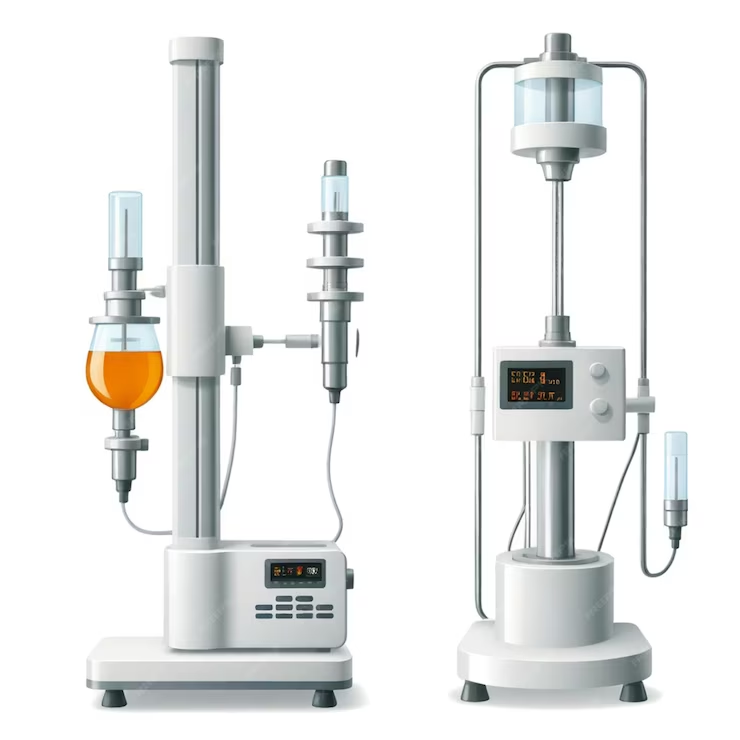
A jar filling machine operates through a series of carefully coordinated processes designed to efficiently fill jars with liquid or semi-liquid products. The machine typically begins by automatically placing empty jars onto a conveyor system. Once in position, the jars are moved to a filling station where a precise volume of product is dispensed into each jar. Advanced models use sensors and electronic controls to ensure accuracy and consistency in filling. After the jars are filled, they are often sealed and labeled before being transported for further processing or shipment. Understanding these operations helps in appreciating the machine’s role in achieving high-speed, high-accuracy packaging, which is essential for maintaining product quality and meeting production targets.
How A Jar Filling Machine Enhances Efficiency And Accuracy In Packaging?
A jar filling machine enhances efficiency and accuracy in packaging by automating and streamlining the filling process. Unlike manual methods, which are prone to variability and errors, these machines use advanced technology to ensure that each jar receives a precise amount of product. This automation reduces the time required for filling, allowing for faster production rates and minimizing downtime. The integration of sensors and control systems further improves accuracy by monitoring and adjusting fill levels in real-time. Consequently, businesses can achieve higher production volumes, maintain consistent product quality, and reduce the likelihood of costly mistakes, all of which contribute to overall operational efficiency and cost-effectiveness.
Choosing The Right Jar Filling Machine: Key Considerations For Your Needs
Selecting the right jar filling machine involves evaluating several key factors to ensure it meets your specific needs. First, consider the type of product being packaged, as different machines are designed for liquids, powders, or semi-solids. Jar size and shape also play a crucial role; the machine should be capable of accommodating the jars used in your production line. Additionally, assess the machine’s filling capacity and speed to match your production volume requirements. Features such as ease of cleaning, maintenance, and integration with other packaging equipment are also important. By thoroughly evaluating these aspects, you can choose a jar filling machine that aligns with your operational goals and optimizes your production process.
The Role Of A Jar Filling Machine In Modern Manufacturing
In modern manufacturing, a jar filling machine plays a pivotal role by automating the filling process and enhancing production efficiency. These machines are integral to industries such as food and beverage, pharmaceuticals, and cosmetics, where precision and consistency are paramount. By automating the filling process, these machines help manufacturers keep up with high production demands while maintaining product quality and safety. They also enable rapid changes between different jar sizes and product types, offering flexibility in production. As manufacturing continues to evolve, jar filling machines contribute significantly to meeting market demands, optimizing supply chains, and improving overall productivity in the industry.
Maintaining Your Jar Filling Machine: Tips For Longevity And Performance
Proper maintenance is crucial for ensuring the longevity and optimal performance of a jar filling machine. Regular cleaning is essential to prevent product buildup and contamination, which can affect both the machine’s efficiency and the quality of the packaged goods. Routine inspections and servicing help identify potential issues before they become major problems, reducing the risk of unexpected downtime. Lubricating moving parts and checking for wear and tear on components can extend the machine’s lifespan and maintain its performance. Additionally, keeping the machine updated with the latest software and technology ensures it operates at peak efficiency. By adhering to a comprehensive maintenance schedule, businesses can ensure their jar filling machine remains reliable and effective over time.
Comparing Manual Vs. Automatic Jar Filling Machines: Which Is Best?
When comparing manual and automatic jar filling machines, several factors should be considered to determine which is best for your operation. Manual machines require more labor and are typically slower, making them suitable for smaller-scale operations or limited production runs. However, they may offer lower initial costs and greater flexibility for varying jar sizes and product types. Automatic jar filling machines, on the other hand, provide higher speed, consistency, and efficiency, making them ideal for large-scale production. They are equipped with advanced features such as automated filling, sealing, and labeling, which can significantly enhance productivity and reduce labor costs. The choice between manual and automatic machines depends on your production volume, budget, and desired level of automation.
How A Jar Filling Machine Can Reduce Waste And Improve Productivity?
A jar filling machine can significantly reduce waste and improve productivity through its precise and consistent filling capabilities. By automating the filling process, the machine ensures that each jar receives the exact amount of product, minimizing overfills and underfills that can lead to waste. Advanced models are equipped with sensors and controls that adjust fill levels in real-time, further reducing the potential for errors. This accuracy not only optimizes product usage but also enhances overall production efficiency by reducing the need for rework and product loss. As a result, businesses can achieve higher production yields, lower operational costs, and a more sustainable packaging process.
Conclusion
In summary, investing in a jar filling machine offers substantial benefits for businesses, including enhanced efficiency, accuracy, and productivity. Understanding how these machines operate and the factors to consider when choosing the right one can help optimize your packaging process. Proper maintenance ensures longevity and performance, while comparing manual and automatic options allows you to select the best fit for your needs. By reducing waste and improving overall productivity, jar filling machines play a crucial role in modern manufacturing, contributing to operational success and cost savings.

Hello there! I’m Erica Harrison, a talented writer based in the bustling city of Austin, United States. With a penchant for business and technology, my writing reflects a deep understanding of diverse subjects. From insightful tech analyses to savvy business strategies, I navigate the intricate realms of knowledge, delivering content that captivates and informs. Join me in exploring the dynamic intersections of business and technology.