

2D cartoon animation is one of the key styles of explainer videos. It’s extensively engaged for producing animated videos, cartoons, marketing films, advertisements, corporate trainings, educational literature, video games, and many more.
With the upsurge of explainer videos, many businesses deliberate using 2D cartoon animation for brand marketing, as they surge conversion rates by 20%. Some businesses recruit video animation agencies, while others struggle to develop them online with the aid of video maker software.
What is 2D Animation?
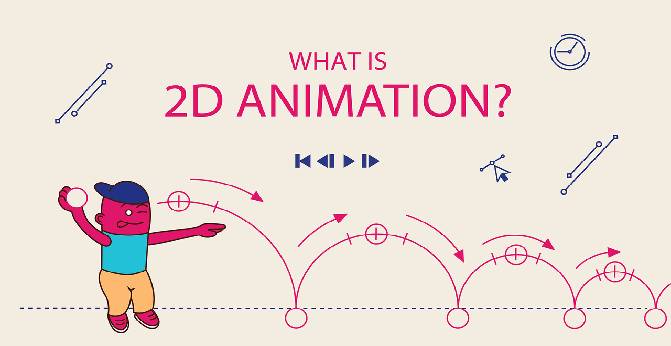
2D cartoon animation videos are considered by having themes and cartoon characters made in the 2D format. It implies that they only have breadth and height.
It deliberates a conventional animation flair. Originally, it was generated by bringing together the frames in which one slide was followed by another one which faintly differed from it. Each second had 24 frames.
We all recollect the typical Disney animations, right? Cinderella, Sleeping Beauty, Mickey Mouse, and many more. They are few of the most common 2D animations.
With the improvement of computer technologies, this development was also digitized through several 2D animation software with the choice of sketching the cartoons and themes straight into the processor and animating them.
Today, let’s study more about how 2D cartoon animation is developed. The method consists of 3 main stages: pre-production, production, and post-production.
Pre-Production
The pre-production is the first stage of developing animations. During this process, the animation crew advances the theme and pens the script of the animation, sketches the cartoons, produces a storyboard, selects the color palettes, formulates the backgrounds, and registers the voice-over. This is a groundwork stage for the key process, so it needs to be appropriately executed.
A well-worded script should infer all the graphical directions and themes. The storyboard is founded on the script, so it visually characterizes the arrangement of movements and actions by screening how they are structured.
The subsequent stride is crafting the cartoons, charting the backdrops, and arranging other pictorial rudiments of the animation. It begins from basic sketches and advances into thorough designs and pictures. Next, it’s time to choose the color theme of the animation, containing the colors of different things and lighting.
Another significant fragment of any video animation are backgrounds where dissimilar movements come to life and the cartoons perform their doings.
Throughout the pre-production development, the key background blueprints are outlined, based on the storyboard. The rough drawings will be colored in the production stage.
Production
Production is the procedure of forming the 2D cartoon animation by assembling all the generated constituents together and producing the extracts. This comprises coloring the backgrounds, making the distinct scenes and activities, creating the rough animation, and tracing, coloring and painting the scenes with the help of animation software, compositing, and export.
To bring everything together, video creators design an exposure sheet which consists of all the directions of how to create each scene. The exposure sheet is divided into 5 parts:
- Actions and timing
- Narration and music
- Animation layers
- Backgrounds
- View perspective
Once the coarse 2D animation is generated, it needs to be polished and cultured. This procedure is also named tracing and can be completed in two ways: in a fresh layer or right over the same layer with unalike colors.
For instance, if you need to produce a dancing ball scene, you should sketch makeshift frames between the first part where the ball is on the top and the second scene where the ball touches the ground.
When the frames are entirely complete, they are scanned into a computer, in the case if they are not drawn digitally. Next, it’s time to chain all the visual components centered on the exposure sheet. During the composting process, the animator augments the backgrounds, frames, sounds, and any other effects that are essential.
This is typically accomplished through various video animation software. When the compositing stage is finished, the animated frames are rendered as videos or movies.
Post-Production
Post-production is the last editing process of 2D cartoon animation. In this process, the video animation is enriched with added sound effects or soundtracks which intensified the emotional appeal of the animation. When the final version is complete, it’s then rendered and exported into different video playing formats.
These were the rudimentary basics of 2D cartoon animation and its formation process that every animator should know about. To turn into an innovative animator, you should acquire more skills and best practices of creating 2D cartoon animations.